By Pradeep Pandey · Co-Founder · 30 min read · Updated
Best Per Diem Nurse Scheduling Software: 2026 Guide
At a small hospital, the per diem nurse may be the one who covers the 5 a.m. callout. This guide reviews eight platforms on how they handle per diem availability, callout coverage, overtime tracking and credential verification.

Key Takeaways
- Per diem nurses are a primary coverage mechanism at small and rural hospitals, not a supplemental one. At Critical Access Hospitals (CAHs), per diem staff often make up a large share of the effective nursing roster.
- An availability calendar that each per diem nurse fills in works poorly when the call-in decision is last-minute and the calendar is out of date.
- The highest-value feature for per diem scheduling is a replacement call list that checks each nurse’s availability against their overtime hours this week. Test every tool for it in the demo.
- SimpleScheduleAI treats per diem availability as a hard rule and ranks callout replacements by overtime risk, with every change recorded in the audit trail delivered with each schedule. It was built for a critical access hospital that leans on per diem staff.
- Aladtec handles per diem tracking well for self-serve environments. NurseGrid Manager excels at per diem communication but does not build schedules. Deputy has the lowest published price here but lacks healthcare compliance features.
For a broader comparison of scheduling platforms, see our nurse scheduling software guide.
Table of Contents
- What Does a Critical Access Hospital Need to Set Up a PRN Pool?
- Quick Comparison: All 8 Platforms for Per Diem Scheduling
- How to Evaluate Per Diem Scheduling Software?
- The 8 Best Options, Reviewed for Per Diem Nurse Scheduling
- What Makes Per Diem Scheduling Uniquely Difficult?
- Which Software Fits Your Per Diem Model?
- How SimpleScheduleAI Handles Per Diem Nurses?
- What to Do This Week
- Frequently Asked Questions
Per diem nursing is how small hospitals stay staffed without carrying a full-time roster that exceeds patient volume. At a Critical Access Hospital (CAH), the per diem pool is a structural part of the staffing model. The per diem nurses who work two to four days per month are the same nurses who fill the Saturday night callout and the holiday shift that no full-timer wanted.
The scheduling challenge is that per diem availability is fluid. It changes week to week, sometimes day to day. A tool that handles per diem staff poorly creates two problems simultaneously: it misses available per diem nurses during callout events, and it surfaces nurses who are already at overtime risk because the system did not track their current-week hours.
What Does a Critical Access Hospital Need to Set Up a PRN Pool?
A PRN pool is a group of nurses who work as needed, with no guaranteed schedule. Running one at a critical access hospital takes four things. You need a current list of PRN nurses and the units each can work. You need each nurse’s available dates before the schedule is built. You need a written callout order. And you need a running count of each nurse’s hours this week.
Software can carry the last three. Here is what each one does for you:
- Available dates, collected before the build. The schedule can only use a PRN nurse on dates that nurse offered. Without the dates in hand, the manager ends up phoning around after the schedule is posted.
- A written callout order. It says when you call a PRN nurse rather than a float nurse, a full-timer on overtime, or an agency. Decide it once, so the 5 a.m. call does not depend on who picks up the phone.
- Hours this week, per nurse. A PRN nurse who already worked two shifts elsewhere in the building can tip into overtime on the third. The count needs to sit next to the callout list.
Two jobs usually come up in the same question and are separate: credential verification and timekeeping. SimpleScheduleAI does neither. It does not check licenses or certification expiry, and it does not run a time clock. When you compare the tools below, check each one for those jobs on their own terms.
What SimpleScheduleAI does cover: PRN availability is a hard rule, so a per diem nurse is never scheduled on a date they did not offer. Our team keeps each nurse’s dates current from what the hospital sends us. The system flags any PRN nurse who has not sent dates for the cycle. For the definitions behind these terms, see what per diem nursing is.
Here is how all 8 platforms compare before we go deeper:
Quick Comparison: All 8 Platforms for Per Diem Scheduling
| Platform | Per Diem Fit | Availability Tracking | Callout Ranking | Cost/Month |
|---|---|---|---|---|
| SimpleScheduleAI | Built for CAH per diem model | Yes, with OT cross-check | Yes, ranked by OT risk | $1,000-1,500 flat |
| Aladtec | Good for self-serve per diem | Yes, self-reported | Partial, manual sort | Quote only (not published) |
| NurseGrid Manager | Communication layer only | Yes, nurse app | No, broadcast only | ~$150-300 |
| SmartLinx | Good for 50+ bed hospitals | Yes, rules-based | Yes, configurable | Not listed |
| QGenda | Mid-market, complex setup | Yes, configurable | Yes, configurable | $500+ |
| OnShift | LTC-focused | Yes, open-shift model | No, broadcast | Not listed |
| Deputy | Generic, no compliance | Yes, availability blocks | No, broadcast | $4.50/user |
| UKG | Enterprise, overkill | Yes, deep integration | Yes, configurable | $500-1,200+ |
How to Evaluate Per Diem Scheduling Software?
Per diem scheduling has specific requirements that differ from full-time nurse scheduling. The evaluation criteria reflect those differences.
Evaluation Criteria for Per Diem Nurse Scheduling Software
Ordered by weight for the small-hospital per diem model
Ranked replacement list with overtime cross-check: The gap to test for is a callout replacement list sorted by availability only, not by overtime risk. At a small hospital, the first available per diem nurse may be the one who tips into overtime by taking the shift. A ranked list that surfaces nurses in order of lowest overtime risk eliminates that calculation from the manager’s plate at 5:45 a.m.
Per diem availability accuracy: Self-reported availability works when per diem nurses keep their calendars current. In practice, most per diem nurses update availability weekly at best and sometimes not at all between availability windows. The best tools surface this discrepancy by showing when availability was last updated.
Overtime tracking for per diem staff: The FLSA 8-and-80 rule for healthcare employers lets a hospital use a 14-day period instead of the standard 40-hour workweek. Overtime is then owed after 8 hours in a day or 80 hours in the period, so every 12-hour shift carries 4 hours of daily overtime. Per diem nurses who work across multiple short shifts in a pay period can cross the overtime threshold without the manager realizing it unless the system tracks cumulative hours against the chosen FLSA model.
Credential and competency verification: A per diem nurse filling a floor shift needs to be confirmed as meeting the credential and competency requirements for that unit, not just available. Tools that track credential expiration dates against assignments prevent scope-of-practice compliance gaps.
Survey documentation: The CMS Conditions of Participation for CAHs require that “a registered nurse, clinical nurse specialist, or licensed practical nurse is on duty whenever the CAH has one or more inpatients” (§485.631(a)(5)). A shift record that includes per diem nurses is how you show a surveyor who was on duty. If per diem shifts are recorded separately from scheduled shifts, survey preparation doubles the manual work.
The 8 Best Options, Reviewed for Per Diem Nurse Scheduling
1. SimpleScheduleAI
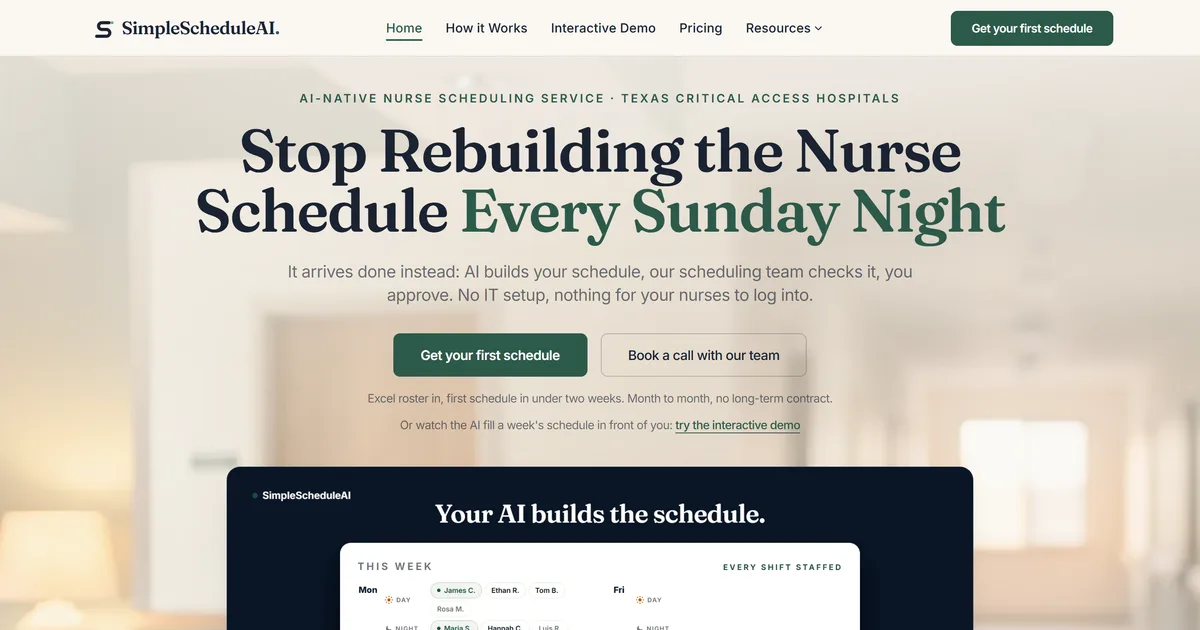
SimpleScheduleAI is an AI-native nurse scheduling service designed for Critical Access Hospitals where per diem nurses are a structural component of the roster, not an exception. Per diem availability is tracked alongside full-time scheduling, including which PRN staff still owe their availability for the next cycle, and the system schedules and ranks against it. Replacement call lists cross-reference current-period hours against the 40-hour weekly FLSA overtime threshold before surfacing names. The nurse manager receives a list of available per diem nurses sorted by lowest overtime risk first.
Best for: Critical Access Hospitals where per diem nurses fill a large share of weekly shift coverage and the nurse manager needs callout replacements identified in under two minutes with no manual overtime calculation.
Key advantages:
- Ranked replacement list generated in under two minutes, cross-referenced against FLSA overtime accumulation for each per diem nurse
- Per diem availability is maintained centrally, not through nurse self-reporting alone, reducing the lag between availability changes and scheduler visibility
- Per diem shifts filled through a callout are recorded in the same audit trail as scheduled shifts, so the shift record lives in one place
- Unit competency requirements are checked before a per diem placement is confirmed, so a nurse not cleared for that unit does not reach the confirmation step
Key limitations:
- The service model means less direct manager control over individual per diem scheduling decisions compared to self-serve platforms
- Not designed for hospitals with a large agency or travel nurse component requiring external credentialing workflows
Not right for: A larger hospital or health system that wants to operate its own scheduling platform in-house, or a facility whose per diem coverage is mostly agency and travel staff rather than a local per diem pool. Those needs are a better match for a self-operated enterprise tool.
Verdict: The strongest fit for a CAH where per diem nurses are essential to daily coverage and the nurse manager cannot spend 30 minutes per callout event doing manual overtime math. Its service model handles the operational overhead that self-serve tools push back to the manager.
Cost: Flat monthly price by roster size: $1,000/month for up to 20 nurses, $1,500/month for 21 to 40 nurses. No per-nurse or setup fees.
2. Aladtec
Ratings: Capterra 4.6/5 (17 reviews, small sample); G2 4.5/5 (94 reviews).
“When editing the schedule there are a lot of clicks involved.”
Amanda F., Nurse Manager, Hospital & Health Care, October 13, 2020, Capterra
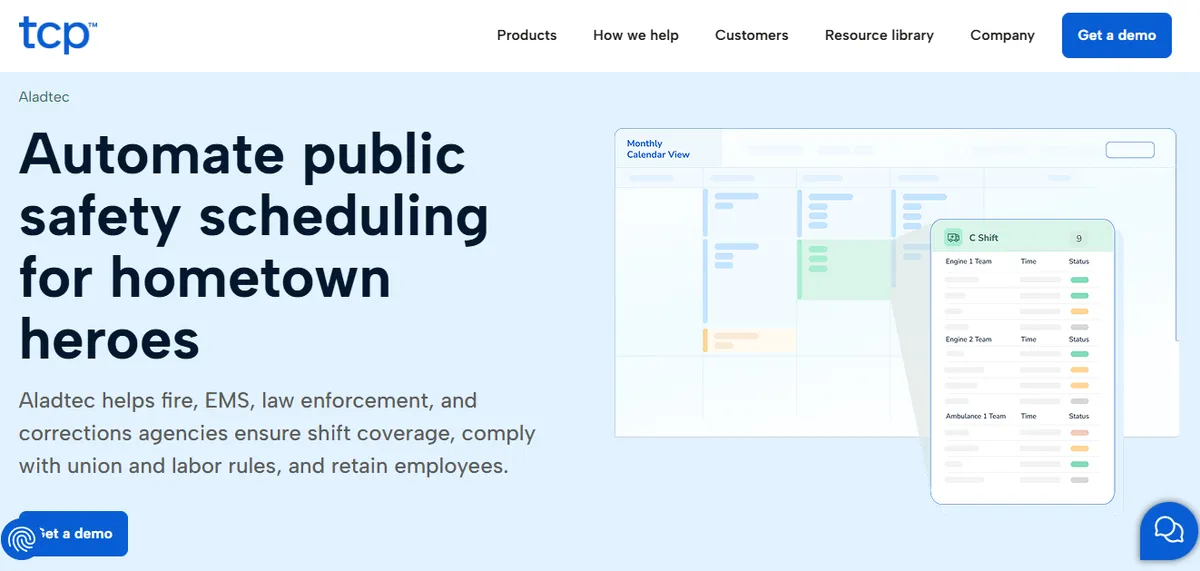
Aladtec handles per diem staff through a self-reporting availability system where nurses submit available shifts via the mobile app. The manager views availability alongside scheduled staff and can broadcast open shifts or directly assign per diem nurses to gaps. It works well when per diem nurses keep their availability windows current.
Best for: Small hospitals that want a self-serve tool for managing a per diem pool of 5-15 nurses and have a nurse manager willing to actively maintain availability data for per diem staff who do not update their own.
Key advantages:
- Clean separation of per diem staff from full-time staff in the scheduling view
- Self-service shift pickup for per diem nurses reduces the manager’s direct involvement in routine gap-filling
- Solid mobile app that per diem nurses typically adopt quickly, improving self-reporting consistency
- Configurable minimum staffing rules can flag when per diem coverage is insufficient before the shift starts
Key limitations:
- Callout ranking is not automated; the manager sees availability but must manually assess overtime risk before calling
- No built-in FLSA tracking specific to the 8-and-80 rule; overtime rules require manual configuration
- Per diem nurses who rarely update their availability create blind spots in the manager’s callout options
Verdict: The strongest self-serve option for per diem management at a small hospital. The main limitation is that callout decisions still require the manager to manually check overtime status, which costs time at the worst possible moment.
Cost: Not published. TCP quotes on request.
3. NurseGrid Manager
Ratings: Capterra 4.2/5 (13 reviews, small sample); G2 4.6/5 (5 reviews, small sample).
“Ease of loading schedules and posting open shifts.”
Inpatient Director, Hospital & Health Care, June 17, 2024, Capterra
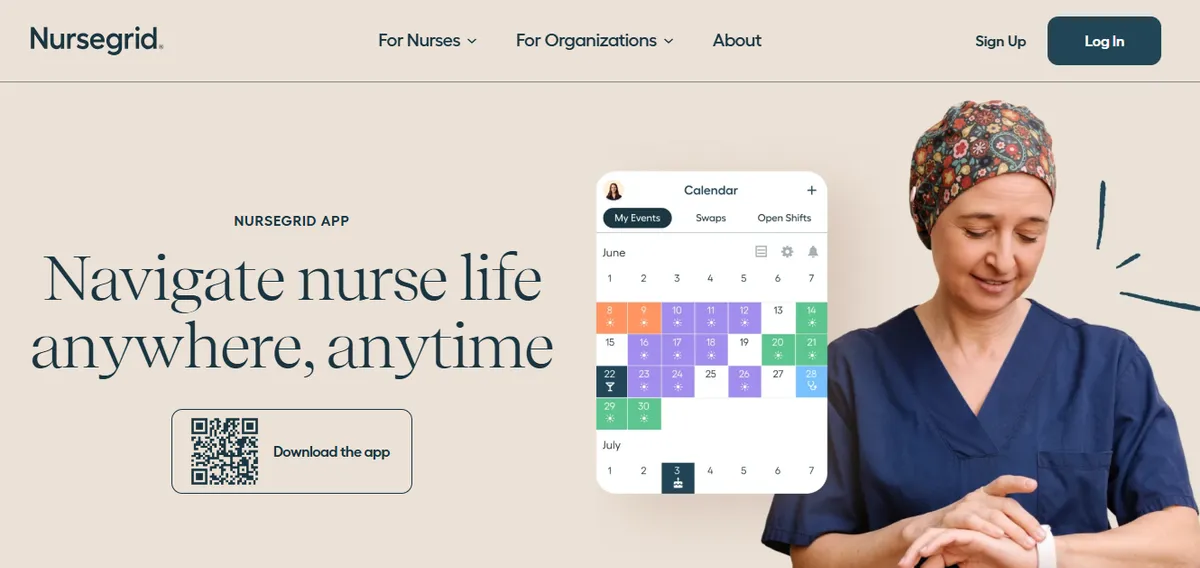
NurseGrid Manager is a nurse communication platform with a strong mobile app that per diem nurses adopt at high rates. Per diem nurses use it to indicate available days, pick up open shifts, and receive shift offers. The manager layer broadcasts open shifts to the per diem pool and tracks responses. It does not build schedules.
Best for: Hospitals that already have a scheduling process in place and want to reduce the phone-tag burden of reaching per diem nurses during callout events.
Key advantages:
- Per diem nurses have strong mobile app adoption because the interface is simple and does not require training
- Broadcast-to-pool open shift notifications reach all available per diem nurses simultaneously, reducing individual calling
- Availability visibility in the manager dashboard is clear and updated in real time as nurses mark themselves available
Key limitations:
- Does not build schedules; the underlying scheduling process must exist in another tool or Excel
- No overtime tracking, FLSA rule enforcement, or CMS documentation for per diem shifts
- Callout replacement is broadcast-based, not ranked; the first responder gets the shift regardless of overtime status
Verdict: NurseGrid Manager solves the communication layer of per diem scheduling. It does not solve schedule construction, overtime management, or compliance documentation. Hospitals with a strong existing scheduling process that just need faster callout response will find it valuable.
Cost: Approximately $150-300 per month for the manager tier. Pricing requires contact.
4. SmartLinx
Ratings: Capterra 4.5/5 (6 reviews, small sample); G2 3.8/5 (11 reviews).
“Some changes can only be made on the back end.”
Daniel C., CFO, Hospital & Health Care, March 16, 2021, Capterra
SmartLinx has strong per diem and contingent worker management features designed for the long-term care environment where per diem staffing is similarly structural. The platform tracks availability, competency, and hours across contingent staff and integrates per diem coverage into the same scheduling and time-and-attendance system used for full-time staff.
Best for: Hospitals in the 50-100 bed range with a larger per diem pool (15-30 nurses) and an IT resource who can manage configuration and ongoing maintenance.
Key advantages:
- Integrated contingent worker module tracks per diem hours, availability, credentials, and overtime in a single system
- Labor analytics dashboard shows per diem utilization rates, cost per shift, and overtime concentration across the per diem pool
- Rules-based callout replacement can be configured to filter by overtime status before surfacing available per diem names
Key limitations:
- Implementation for a hospital with a complex per diem model is a multi-week project, not a quick start
- Configuration of FLSA overtime rules and credential tracking requires IT or vendor support involvement
- Cost and configuration depth are better matched to hospitals larger than 25 beds
Verdict: SmartLinx is a capable platform for per diem management, but its strength is at hospitals with more complex contingent workforce needs than a typical 25-bed CAH. The implementation burden and cost are mismatched to small-roster per diem models.
Cost: Pricing not listed on website. Contact for a quote.
5. QGenda
Ratings: Capterra 4.2/5 (68 reviews); G2 4.6/5 (164 reviews).
“Doing the initial set up of new providers is a little complicated.”
Brandi D., Scheduling Coordinator, Hospital & Health Care, December 13, 2023, Capterra
QGenda supports per diem scheduling through its contingent staff management features, which are more sophisticated than most platforms. The platform can track per diem availability, enforce credential requirements, and generate callout lists filtered by availability and compliance rules. It is most effective in environments where per diem nurses also include advanced practice providers.
Best for: Hospitals that need unified scheduling of both per diem nurses and per diem physicians or advanced practice providers, where credential management is a primary concern.
Key advantages:
- Strongest per-credential-type tracking of any tool in this list, ensuring per diem assignments match unit-specific competency requirements
- Can manage per diem schedules for both nurses and providers on one platform, reducing system fragmentation
- Configurable rules for FLSA compliance and availability enforcement
Key limitations:
- Expensive relative to small per diem pool management; cost structure is designed for larger contingent workforces
- Configuration complexity means significant time investment before the per diem module operates correctly
- Primarily optimized for provider scheduling logic; nursing-specific per diem workflows require customization
Verdict: QGenda is the right choice for hospitals where per diem coverage includes physicians and advanced practice providers alongside nurses, and where credential management complexity justifies the cost. For nursing-only per diem pools, simpler tools are more cost-effective.
Cost: $500 or more per month. Pricing requires a quote.
6. OnShift
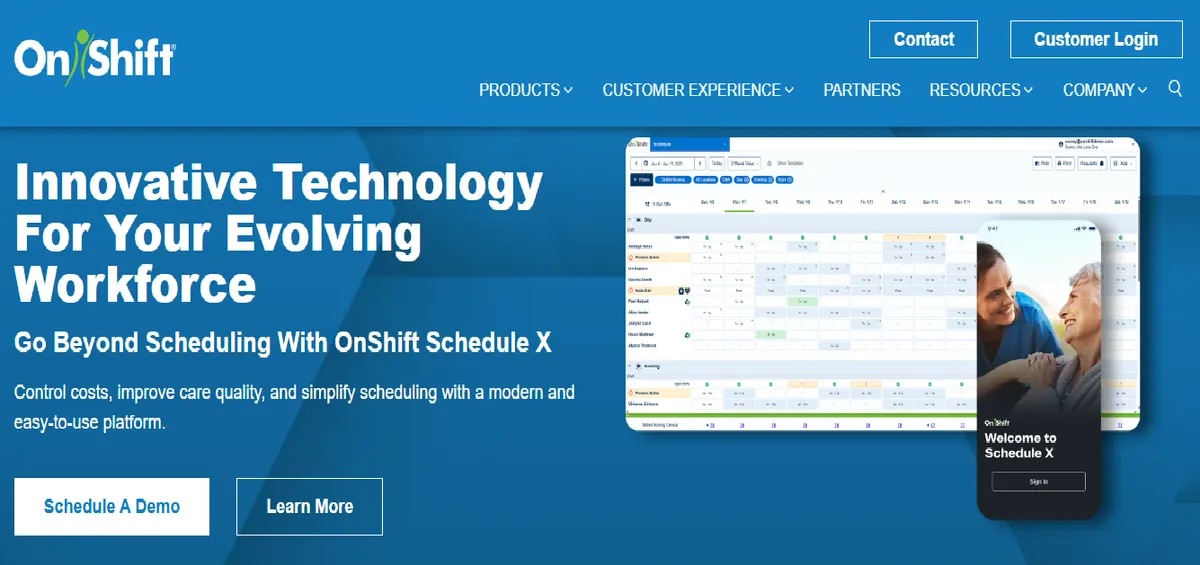
Ratings: Capterra 3.9/5 (14 reviews, small sample); G2 4.5/5 (40 reviews).
OnShift is a workforce management platform for post-acute and senior-care settings, now a ShiftKey brand, following the staffing marketplace’s 2022 investment and its announcement of full integration in July 2023. Its per diem model is built around open-shift posting and caregiver engagement features. Per diem nurses see available shifts in the app and pick up what they want. The manager can also directly offer shifts to specific per diem staff. This works well in long-term care environments where per diem nurses have predictable availability windows and shift pickup is routine.
Best for: Hospitals or long-term care facilities where per diem nurses are accustomed to self-directed shift pickup, and the manager’s role is posting available shifts rather than actively building a per diem roster.
Key advantages:
- Per diem shift pickup via mobile app reduces manager outreach time for predictable coverage gaps
- Caregiver engagement features encourage per diem nurses to flag availability proactively rather than reactively
- Strong notification system ensures per diem nurses see open shifts quickly
Key limitations:
- No callout ranking by overtime status; the first per diem nurse to accept the shift gets it regardless of hours worked
- Healthcare compliance for CAH environments requires custom configuration; not shipped as a default
- Designed for post-acute and senior-care operators; hospital and CAH-specific per diem workflows are not the primary design target
Verdict: OnShift works well when per diem nurses reliably self-select shifts. It works poorly for urgent callout events where the manager needs to confirm a specific replacement quickly and cannot wait for shift-pickup responses.
Cost: Pricing not listed on website. Contact for a quote.
7. Deputy
Ratings: Capterra 4.6/5 (773 reviews); G2 4.6/5 (666 reviews).
“Deputy makes scheduling very easy and organised. It’s simple to use, and I like how I can see my shifts clearly and get updates quickly.”
Portia A., Nurse, Hospital & Health Care, April 8, 2026, Capterra
Deputy’s per diem model relies on availability blocks set by the nurse and open-shift broadcasting. The platform is general-purpose and has no healthcare-specific per diem features. It handles per diem nurses the same way it handles part-time retail staff: availability windows, open-shift notifications, and manager-initiated direct offers.
Best for: Hospitals that need a low-cost scheduling tool for a small per diem pool (under 10 nurses) and are not yet managing FLSA compliance or CMS documentation through their scheduling system.
Key advantages:
- Fastest deployment of any tool in this list; per diem nurses can be added and operational within hours
- Clear availability view shows which per diem nurses have flagged themselves as available on a given day
- Per-user pricing means the per diem pool can grow without a major cost increase
Key limitations:
- No overtime tracking specific to healthcare FLSA rules; managers must calculate per diem overtime manually
- No CMS documentation features; compliance record-keeping for per diem shifts must be managed separately
- No credential or competency tracking; per diem assignment compliance is manual
Verdict: Deputy is adequate for a hospital that needs to track per diem availability and broadcast open shifts at minimal cost. It is not suitable for hospitals with active CMS compliance obligations or overtime management requirements.
Cost: $4.50 per user per month. At 20 per diem nurses, approximately $90/month.
8. UKG (formerly Kronos)
Ratings: Capterra 4.3/5 (727 reviews); G2 4.3/5 (2,167 reviews).
“Some areas of the platform can be complex for new users, and certain reports or customizations may require additional training or administrative expertise.”
Swaminathan S., HR Assistant, Hospitality, June 18, 2026, Capterra
UKG has comprehensive contingent worker management capabilities within its enterprise workforce management suite. Per diem nurses can be managed as contingent workers with full FLSA tracking, credential management, and scheduling integration. The capability exists; the question is whether the implementation burden and cost are justified for a small per diem pool.
Best for: Hospitals that are part of a larger health system already running UKG, where per diem management is one module in a system-wide workforce management implementation.
Key advantages:
- Most complete per diem and contingent worker management of any platform, including FLSA tracking, credential management, and scheduling integration
- Integrates with major payroll and HR systems to ensure per diem compensation is calculated correctly
- Enterprise-grade compliance tools for healthcare FLSA rules
Key limitations:
- Implementation at a small hospital is a lengthy enterprise project measured in many months and requires dedicated IT resources
- Per diem-specific module configuration requires specialist knowledge; not a self-serve setup
- Total cost is prohibitive for standalone small hospitals managing a per diem pool of 5-15 nurses
Verdict: UKG is the right answer for a large health system managing hundreds of per diem staff across multiple facilities. For a standalone CAH managing 5-20 per diem nurses, the implementation cost and complexity far exceed the operational benefit.
Cost: $500-1,200 or more per month. Pricing requires a quote.
What Makes Per Diem Scheduling Uniquely Difficult?
The Per Diem Scheduling Challenge at Small Hospitals
Availability Volatility
Per diem availability changes faster than weekly update cycles. A nurse who marked herself available on Monday may have taken a shift elsewhere by Wednesday. Stale availability data means failed callout calls.
Hidden Overtime Risk
Per diem nurses who work short shifts across a bi-weekly period can cross FLSA overtime thresholds unexpectedly. Without real-time hour tracking, a callout fill becomes an unplanned overtime expense the manager approved without knowing it.
Documentation Gap
Per diem shifts filled outside the normal schedule often do not make it into the scheduling system at all. When CMS surveyors ask for staffing records, the per diem coverage that kept the floor staffed is invisible in the official record.
The three challenges compound each other. Volatile per diem availability makes the callout list unreliable. Hidden overtime risk means the manager cannot safely call the first available name without checking hours. And undocumented per diem shifts create CMS compliance gaps that only surface during a survey, not during day-to-day operations.
At a 25-bed CAH, these three problems interact every time there is a callout event, which at a hospital with one floor and 15-25 nurses means multiple times per week.
Which Software Fits Your Per Diem Model?
| Tool | Per Diem Capability | Implementation Complexity | Best Fit |
|---|---|---|---|
| SimpleScheduleAI | High | Low to medium | Best fit: CAH per diem-heavy roster |
| Aladtec | Good | Low to medium | Self-serve small-hospital per diem pool |
| NurseGrid Manager | Low to medium | Low | Callout communication only |
| SmartLinx | High | High | Hospitals of 50+ beds |
| QGenda | High | High | Provider plus nurse per diem, credential-heavy |
| OnShift | Medium | Medium | Post-acute and senior-care operators |
| Deputy | Low | Low | Low-cost basic availability tracking |
| UKG | High | High | Large health systems already on UKG |
How SimpleScheduleAI Handles Per Diem Nurses?
A scheduling tool can treat per diem nurses as a secondary input, when at a small hospital they are a primary coverage mechanism. SimpleScheduleAI was built for CAHs where per diem staff are a large share of weekly coverage, which means the system treats per diem availability with the same reliability requirements as full-time scheduling.
Per diem availability is maintained centrally alongside full-time scheduling. When a callout event occurs, the system generates a ranked shortlist that includes both full-time and per diem nurses, sorted by current-week hours against the FLSA overtime threshold. The nurse manager sees who is available and who represents the lowest overtime risk, in order, without running a manual calculation.
Every per diem shift filled through a callout is recorded in the audit trail alongside the scheduled shifts, and the audit trail comes with each cycle’s schedule. There is no separate documentation step for per diem coverage.
Competency requirements for the unit are applied before a per diem nurse is offered the shift, so a nurse who is not cleared for that unit does not reach the confirmation step.
Our Take
Per diem coverage at a Critical Access Hospital is structural, not supplemental, so the feature that decides fit is a callout list ranked by overtime risk, not just an availability calendar. That ranking, plus automatic CMS documentation of every per diem shift, is why SimpleScheduleAI is our pick for a per diem-heavy CAH roster. The self-serve tools here are not wrong choices, though: if your nurse manager has the protected time to keep availability data current and check overtime by hand, Aladtec covers similar ground. Ask TCP for a quote, since its price is not published. The honest deciding question is not which tool has the most features, it is how much unprotected admin time the manager actually has each week.
What to Do This Week
Count your per diem callout failures from the last 30 days. A per diem nurse listed as available but unreachable is a failed callout. So is one who accepts the shift but turns out to be at overtime risk. Count those separately from simple unavailability. The number tells you whether your current per diem management system is working.
Check how current your per diem availability data is. Look at your top five per diem nurses. When did each last update their availability? If the answer is more than a week ago, your callout list is unreliable.
Calculate your per diem overtime spend last quarter. Pull payroll data for per diem nurses and flag any shift that triggered overtime pay. If the pattern shows managers approving overtime without knowing the nurse was at risk, the callout process is the cause.
Request a demo of SimpleScheduleAI and ask specifically about per diem management. Ask how the replacement list handles mixed full-time and per diem rosters, how overtime thresholds are tracked per nurse, and how per diem shifts are documented for CMS. See how the service works, or get in touch via the contact page.
If you want a self-serve tool, request an Aladtec trial. Use your actual per diem roster of 5-15 nurses and configure the availability and open-shift notification settings. Measure whether your per diem nurses update their own availability often enough for the tool to be reliable.
Per diem scheduling built for Critical Access Hospitals
SimpleScheduleAI generates replacement call lists that cross-reference per diem availability with real-time overtime tracking. CMS documentation captures every per diem shift automatically. Built for rosters where per diem nurses are essential, not supplemental.
See how it works →Frequently Asked Questions
Is Aladtec or SimpleScheduleAI better for per diem nurse scheduling?
Aladtec is a self-serve tool that gives the manager direct control over per diem scheduling once configured, but the per diem callout process still requires manual overtime checks before each placement. SimpleScheduleAI is an AI-native nurse scheduling service that automates the overtime cross-check within the replacement call list, so the manager receives a prioritized list without doing the calculation herself. For a dual-role nurse manager at a CAH where per diem callouts happen multiple times per week, the automated ranking typically produces a better time ROI than the self-serve model.
Does NurseGrid Manager work for per diem callout coverage?
NurseGrid Manager handles the broadcast communication layer of per diem callouts well: open-shift notifications reach the entire per diem pool simultaneously, reducing individual phone calls. But it does not rank per diem nurses by overtime risk, does not track FLSA hours, and does not document per diem shifts for CMS compliance. It solves the communication problem, not the compliance or overtime management problem.
How do you track per diem nurse overtime with FLSA 8-and-80 rules?
The FLSA 8-and-80 rule allows healthcare employers to pay overtime only when a non-exempt employee works more than 8 hours in a single day or more than 80 hours in a 14-day period, rather than the standard 40-hour weekly threshold. Ask each vendor whether it calculates the 8-and-80 method, and have them show it on a sample pay period. SimpleScheduleAI tracks the standard FLSA threshold of 40 hours in a workweek. It does not yet calculate the 8-and-80 method, so a facility that has adopted it should keep that calculation in payroll.
What is the cheapest per diem scheduling software for a small hospital?
Of the tools here that publish a price, Deputy at $4.50 per user per month is the lowest-cost option. At a 15-nurse per diem pool, it costs approximately $67.50 per month. NurseGrid Manager runs approximately $150-300 per month and adds communication features. Aladtec provides more complete scheduling and availability management, but TCP does not publish its price, so get a quote before comparing. None of these include healthcare compliance features as defaults. For hospitals where FLSA tracking and CMS documentation are requirements, a higher-cost tool that includes those features as defaults often costs less in total labor than the cheapest subscription plus manual compliance work.
What is the difference between per diem scheduling software and a managed scheduling service for per diem nurses?
Per diem scheduling software gives the nurse manager tools to track availability, manage callout replacements, and document per diem shifts. A managed scheduling service handles those tasks for the nurse manager. At a CAH where the nurse manager also takes clinical shifts, software cuts only part of that time because the manager still builds the schedule, while a managed service removes the build entirely. SimpleScheduleAI is an AI-native nurse scheduling service. All other tools in this list are software platforms.
Sources
Vendor ratings reflect each product’s current public review listings. Capterra figures were verified directly from each product’s reviews page on July 15, 2026; G2 figures are from each product’s public G2 listing, which blocks automated retrieval, so those counts are approximate and shift week to week. Ratings are general-audience rather than specific to Critical Access Hospitals, and small-sample scores (fewer than 20 reviews) are directional only. Reviewer quotes are verbatim from the cited Capterra reviews.
- Aladtec, Capterra reviews. Capterra.
- NurseGrid, Capterra reviews. Capterra.
- SmartLinx, Capterra reviews. Capterra.
- QGenda, Capterra reviews. Capterra.
- OnShift, Capterra reviews. Capterra.
- Deputy, Capterra reviews. Capterra.
- UKG Pro, Capterra reviews. Capterra.
- FLSA healthcare overtime and the 8-and-80 rule. U.S. Department of Labor.
- Critical Access Hospital Conditions of Participation, staffing and staff responsibilities, 42 CFR 485.631. eCFR.
Pradeep Pandey is the co-founder of SimpleScheduleAI, an AI-native nurse scheduling service built for Critical Access Hospitals in Texas. He serves as Deputy General Manager of Operations at Apollo Hospitals and holds an MBA from IIM Trichy. LinkedIn →