By Pradeep Pandey · Co-Founder · 22 min read · Updated
Best SmartLinx Alternatives for Critical Access Hospital Scheduling (2026)
SmartLinx is a capable workforce management platform, but many small and community hospitals find it over-engineered for their needs. Implementation takes 3-4 months, configuration requires IT support most small hospitals do not have, and per-user pricing compounds quickly at rosters under 50. This guide reviews the five best SmartLinx alternatives for hospitals ready to right-size their scheduling solution.

SmartLinx is purpose-built for long-term care, post-acute, senior care, and behavioral health. Your acute Critical Access Hospital is not in any of those categories, but the SmartLinx demo may have suggested broader fit. The product is healthcare-specific. That does not mean it is hospital-specific.
This guide compares 6 SmartLinx alternatives for a 25-bed acute CAH, with the implementation effort and reference-customer questions that matter most for the evaluation.
Key Takeaways
- SmartLinx is a strong workforce management platform for long-term care facilities and community hospitals in the 50-150 bed range. Its primary misfit for smaller hospitals is implementation complexity: a full deployment takes 3-4 months, requires IT involvement, and demands ongoing configuration maintenance.
- A common reason small hospitals leave SmartLinx is cost-to-value mismatch. At a 25-bed hospital, you are paying for compliance automation and labor analytics that a larger facility justifies through scale, but a small roster cannot.
- SimpleScheduleAI is the strongest alternative for Critical Access Hospitals (CAHs). It delivers the compliance documentation, callout management, and overtime tracking that SmartLinx provides, without the implementation burden, through a managed service model.
- TCP Scheduling (TCP Software’s enterprise scheduling platform) is the comparable-complexity alternative for mid-size hospitals that need SmartLinx-level compliance automation and already have a TCP Software vendor relationship. It carries similar implementation scope to SmartLinx and is not a simplification.
- Aladtec (also from TCP Software, but a lighter tier) is the right option for small rosters leaving SmartLinx because of cost-to-value mismatch. Faster to configure than either SmartLinx or TCP Scheduling, with lower ongoing maintenance.
- NurseGrid Manager and Deputy are appropriate for hospitals that discover they were using SmartLinx minimally and need schedule visibility and communication without full workforce management complexity.
Table of Contents
- Why Hospitals Switch Away from SmartLinx?
- Quick Comparison: SmartLinx vs. The Alternatives
- What Are the 5 Best SmartLinx Alternatives for Critical Access Hospital Scheduling?
- 1. SimpleScheduleAI
- 2. Aladtec
- 3. TCP Scheduling
- 4. NurseGrid Manager
- 5. Deputy
- When to Stay with SmartLinx?
- How SimpleScheduleAI Compares to SmartLinx?
- What to Do This Week
- Frequently Asked Questions
SmartLinx built its reputation in long-term care scheduling, where 24/7 coverage requirements, complex per diem pools, and integrated time and attendance create a workflow that general scheduling tools handle poorly. It is a genuinely capable platform for organizations with the staff and IT resources to implement it correctly.
The mismatch appears at smaller hospitals. A 25-bed Critical Access Hospital (CAH) and a 150-bed long-term care facility both have 24/7 coverage requirements, but the operational and financial scale is different. At 25 beds, the implementation investment, per-user pricing, and ongoing maintenance that SmartLinx requires can consume budget and administrative time that a small hospital cannot spare. This guide evaluates the five best alternatives from the perspective of nurse scheduling software needs at the CAH scale, including the specific compliance requirements that define critical access hospital scheduling. For the broader treatment of how AI-built nurse schedules work, see AI nurse scheduling.
Why Hospitals Switch Away from SmartLinx?
Small hospitals switch away from SmartLinx when the implementation complexity and per-user pricing exceed what a 25-bed facility can justify. SmartLinx’s 3-4 month implementation, IT dependency for ongoing configuration, and feature depth designed for 50-150 bed long-term care facilities create overhead that a Critical Access Hospital with no dedicated IT staff cannot absorb. The most common exit driver is cost-to-value mismatch: paying for compliance automation the hospital uses at a fraction of its capacity.
Small hospitals leave SmartLinx for predictable reasons. The platform’s per-user pricing, IT-dependent configuration, and 3-4 month implementation timeline were designed for mid-market facilities with dedicated IT staff. At 25 beds, those costs do not recover their investment the way they do at 100 beds. The most common exit drivers, ranked by frequency:
Common Reasons Small Hospitals Switch Away from SmartLinx
| Reason | Who It Affects |
|---|---|
| Implementation cost and timeline exceeded expectations | Hospitals mid-implementation or post-deployment |
| Per-user pricing grows faster than scheduling ROI at small rosters | Rosters under 50 nurses |
| Ongoing IT dependency for configuration changes | Hospitals without dedicated IT staff |
| Feature depth exceeds what the hospital actively uses | Hospitals using fewer than three major modules |
Implementation cost and timeline: SmartLinx implementations at small hospitals typically involve significant vendor involvement and a multi-month parallel-run period. At a 25-bed CAH, that means training staff on a complex platform and paying for an implementation that serves a roster smaller than the platform was designed for.
“Implementation was much more complex that expected and end result still was full of errors on first payroll.”
Daniel C., CFO, Hospital & Health Care, March 16, 2021, Capterra
Per-user pricing at small rosters: SmartLinx’s per-user pricing model means the cost per scheduling outcome does not scale down proportionally with roster size. At 20 nurses, the monthly cost per nurse is higher than at 100 nurses. The compliance automation and analytics features that justify SmartLinx’s price at larger facilities are underutilized at 25 beds.
IT dependency for ongoing configuration: SmartLinx requires IT involvement not just for implementation but for ongoing configuration changes. When a scheduling rule needs to change, or a new credential type needs to be tracked, or a new unit opens, the configuration change goes through an IT process. At a small hospital with shared IT resources, that bottleneck slows scheduling adaptation.
Quick Comparison: SmartLinx vs. The Alternatives
SmartLinx competes in a different tier than most small hospital alternatives. The table below compares implementation burden, compliance documentation support, and monthly cost across the five strongest options for a hospital coming off SmartLinx.
| Platform | Best For | Implementation | CMS Docs | Cost/Month |
|---|---|---|---|---|
| SmartLinx (current) | 50-150 bed LTC/hospitals | 3-4 months, needs IT | Yes, configurable | Not listed |
| SimpleScheduleAI | CAHs, managed service | Days, no IT needed | Yes, automatic | Not listed |
| Aladtec | Small rosters, self-serve | 4-6 weeks, self-serve | No, manual export | $200-450 |
| TCP Scheduling | Mid-size hospitals, TCP ecosystem | 3-5 months, needs IT | Yes, configurable | Not listed |
| NurseGrid Manager | Schedule visibility and communication | Days | Not listed | ~$5/user |
| Deputy | Basic schedule visibility | Days | Not marketed | $4.50/user |
What Are the 5 Best SmartLinx Alternatives for Critical Access Hospital Scheduling?
The five strongest SmartLinx alternatives for a Critical Access Hospital are SimpleScheduleAI, Aladtec, TCP Scheduling, NurseGrid Manager, and Deputy. SimpleScheduleAI is the only managed service on the list and the only one purpose-built for CAH compliance requirements. The others are self-serve platforms at varying levels of complexity and cost. The right choice depends on whether your primary need is compliance automation, implementation simplicity, or cost reduction.
1. SimpleScheduleAI
SimpleScheduleAI delivers the compliance documentation, overtime tracking, and callout management that small hospitals typically buy SmartLinx to achieve, without the implementation burden or IT dependency. The managed service model means the hospital provides a roster and scheduling preferences, the AI builds the schedule, and our scheduling team checks it and handles everything else, including maintenance as staff and policies change.
Best for: Critical Access Hospitals that are over-invested in SmartLinx relative to their actual scheduling complexity, or that evaluated SmartLinx and chose not to implement it because of cost and implementation time.
Key advantages:
- Days to first schedule draft via Excel roster upload, compared to 3-4 months for a SmartLinx implementation
- CMS §485.635 documentation is automatic, not a configured module requiring IT setup
- Callout overtime ranking is built into the shortlist generation, not a separately configured compliance rule
- No ongoing IT dependency; the service manages configuration as the hospital changes
- Texas FLSA overtime compliance and CMS CAH requirements are defaults, not configuration options
Key limitations:
- Managed service model means the nurse manager receives draft schedules rather than building them directly; less real-time control than SmartLinx’s self-serve model
- Not designed for multi-facility scheduling or complex departmental scheduling beyond nursing
Verdict: The strongest right-sizing alternative for a CAH that has outgrown Excel but does not need SmartLinx’s full feature depth. SimpleScheduleAI provides the outcomes SmartLinx was purchased to deliver, compliance documentation, callout management, overtime control, without the platform maintenance overhead. Watch the AI build a compliant schedule and rank a callout shortlist live in the interactive simulator.
Cost: Flat monthly price by roster size: $1,000/month for up to 20 nurses, $1,500/month for 21 to 40 nurses. No per-nurse or setup fees.
2. Aladtec
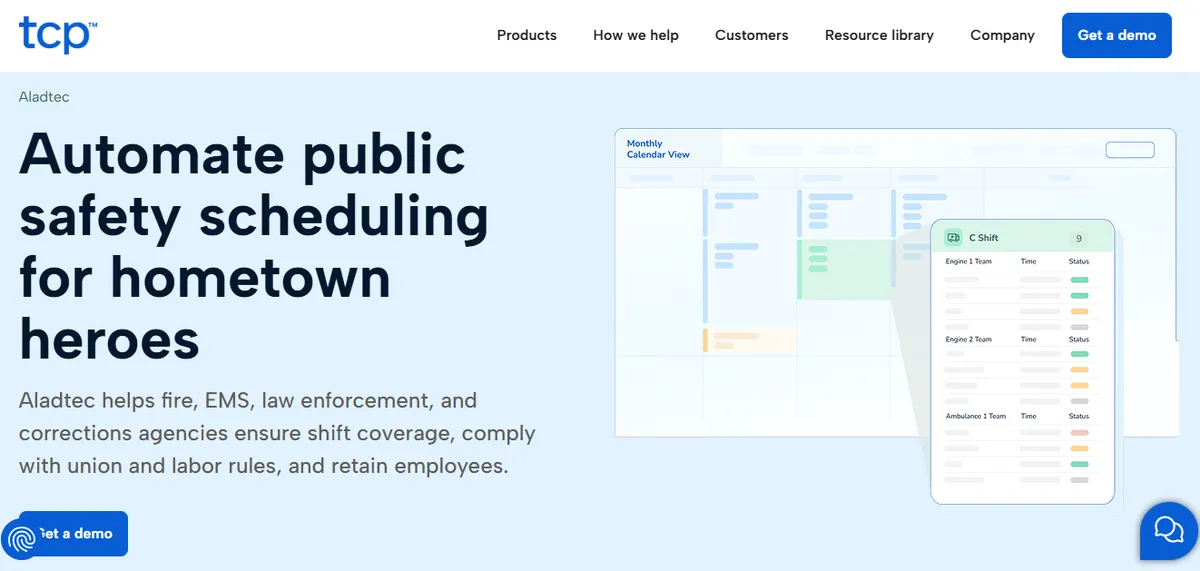
Aladtec is a simpler, faster-to-configure self-serve alternative to SmartLinx for small rosters. Its 24/7 coverage model, availability tracking, and minimum staffing rules handle most of what a small hospital needs without the implementation complexity of SmartLinx.
The tradeoff is that Aladtec has meaningful gaps compared to SmartLinx: no integrated time and attendance, no automated CMS documentation, and manual overtime checking during callout events. It is a simpler tool, which is a feature for small hospitals and a limitation for larger ones.
Best for: Small hospitals that want to move from SmartLinx to a simpler self-serve tool with lower ongoing maintenance burden, and whose primary scheduling requirements are coverage scheduling, availability tracking, and shift communication.
Key advantages:
- Significantly faster to configure than SmartLinx; most small hospitals are operational within 4-6 weeks
- Self-serve model gives the manager direct control over scheduling rules without IT involvement
- Mobile app with strong nurse adoption reduces phone-based communication
- Lower cost than SmartLinx for rosters under 50 nurses
Key limitations:
Scheduling interface friction. Some nurse managers describe a high number of steps required to edit schedules.
“When editing the schedule there are a lot of clicks involved.”
Amanda F., Nurse Manager, Hospital & Health Care, October 13, 2020, Capterra
Administrator setup complexity. The administrator-side configuration can require time to learn, particularly for facilities transitioning from paper-based or manual workflows.
“It was a bit complicated to figure out from the administrator side.”
Jeanne C., Administrative Coordinator, Hospital & Health Care, May 7, 2019, Capterra
Time and attendance integration, automated CMS compliance documentation, and callout overtime automation are not included in the base Aladtec platform. Confirm current feature availability with Aladtec directly.
Verdict: Aladtec is the right downgrade path from SmartLinx for hospitals that are paying for feature depth they do not use and want a simpler system with lower ongoing maintenance. The SmartLinx features that Aladtec lacks, CMS documentation, integrated T&A, must be handled manually or through other tools. See our deeper Aladtec alternatives guide for Critical Access Hospitals.
Cost: $200-450 per month depending on roster size. Pricing requires a quote.
3. TCP Scheduling
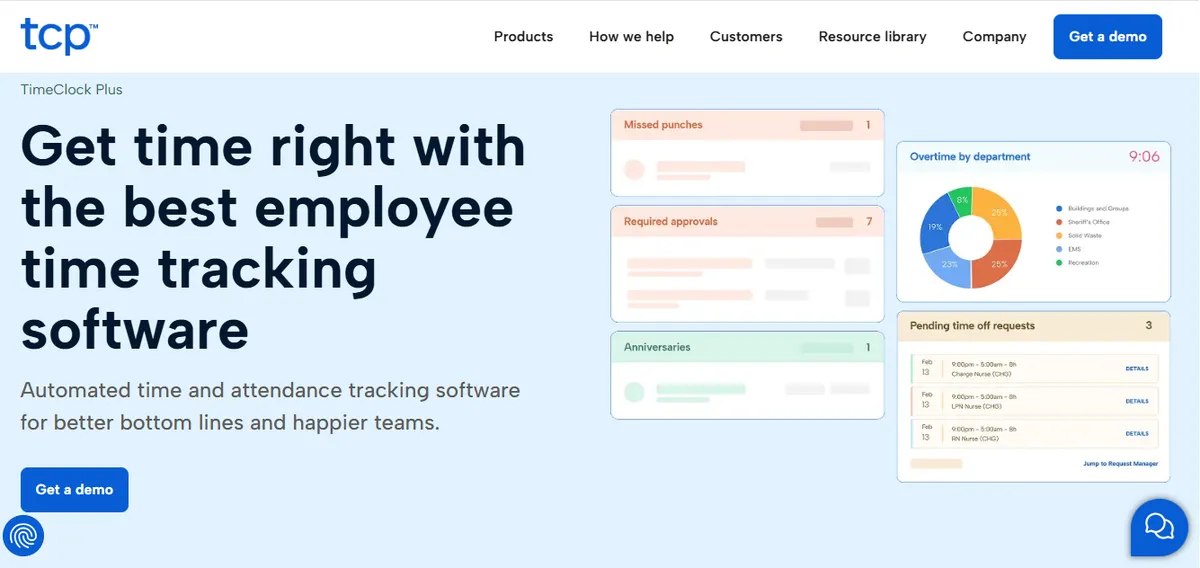
TCP Scheduling is TCP Software’s enterprise-tier platform, the same parent company that owns Aladtec. It competes directly with SmartLinx in the mid-market healthcare segment and offers comparable compliance automation, credential tracking, and time and attendance integration. For hospitals evaluating a SmartLinx replacement that are already familiar with the TCP Software vendor ecosystem, TCP Scheduling is a natural comparison.
TCP Scheduling is designed as an enterprise implementation requiring IT involvement and extended deployment. Ongoing configuration maintenance is part of the operational model. The differentiator is the vendor relationship: for hospitals that have existing TCP contracts through Aladtec, migration may carry pricing and relationship advantages. Confirm current implementation timeline and IT requirements with TCP Software directly.
Best for: Hospitals leaving SmartLinx that already use Aladtec or have a TCP Software relationship, and want to consolidate scheduling under one vendor.
Key advantages:
- Comparable compliance automation and credential tracking to SmartLinx
- If the hospital already has a TCP vendor relationship (through Aladtec), pricing discussions may include bundling or migration incentives
- Integration with TCP’s broader workforce management ecosystem
Key limitations:
Implementation scope. TCP Scheduling is an enterprise platform. Confirm current implementation timeline, IT requirements, and minimum roster size with TCP Software directly before evaluating as a SmartLinx replacement.
Migration scope. Switching from SmartLinx to TCP Scheduling is a full implementation project, not a data migration. Verify project scope and timeline with TCP Software.
Verdict: A comparable platform to SmartLinx in both capability and complexity. Worth evaluating when there is an existing TCP vendor relationship or pricing advantage, but not a meaningful simplification from SmartLinx.
Cost: Pricing not listed. Contact TCP Software for a quote.
4. NurseGrid Manager
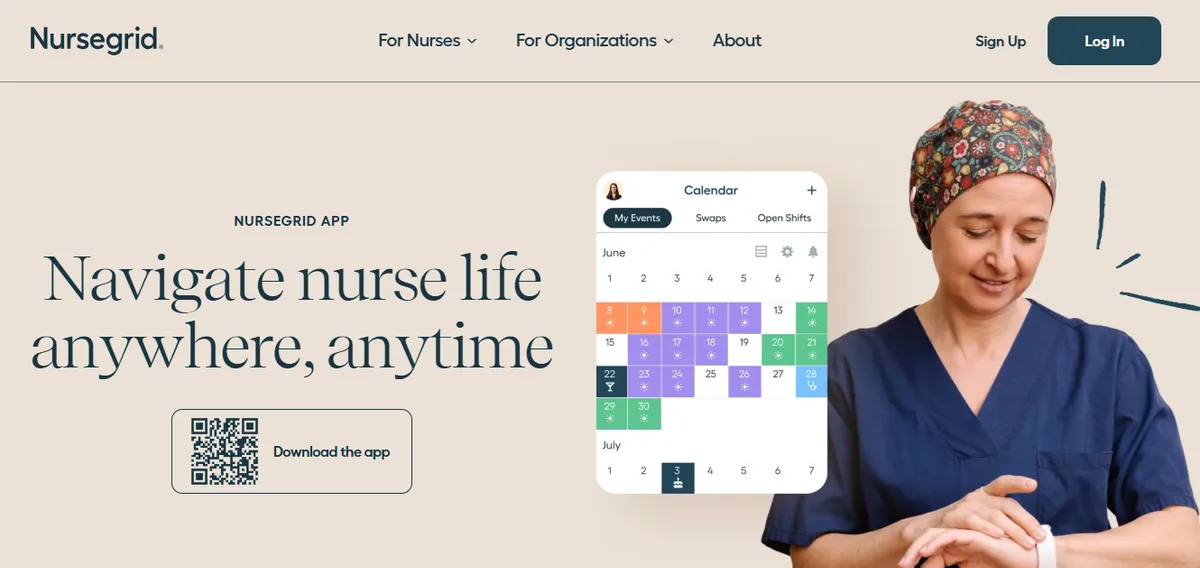
NurseGrid Manager is not a full SmartLinx replacement but can supplement or partially replace it for hospitals that discover they were primarily using SmartLinx for nurse communication and schedule visibility. It handles those functions well at a significantly lower cost.
Best for: Hospitals leaving SmartLinx because nurses are not engaging with the platform’s schedule visibility features, and where better nurse communication is the primary unmet need.
Key advantages:
- Strong nurse-facing mobile app; nurses use it daily for schedule viewing, time-off requests, and shift swap management
- Open-shift broadcast reaches the entire nursing pool simultaneously
- Much lower cost than SmartLinx for the communication layer alone
Key limitations:
Manager app removed. Recent platform updates removed the dedicated manager mobile app; managers now access schedules via desktop browser.
“It no longer has the manager app so I have to login to desktop.”
Chief Nursing Officer, Hospital & Health Care, June 13, 2024, Capterra
“they took away the Manager App for your phone.”
Staffing Coordinator, Medical Practice, June 11, 2024, Capterra
NurseGrid Manager includes schedule building and credential tracking. CMS compliance documentation and time and attendance integration are not listed on the NurseGrid product page. Confirm current capabilities with NurseGrid directly before evaluating as a primary SmartLinx replacement.
Verdict: NurseGrid Manager can replace the communication portion of SmartLinx for hospitals that discover that is the primary usage pattern. All other SmartLinx functions require a separate tool if NurseGrid Manager is the replacement. See our deeper NurseGrid alternatives guide for Critical Access Hospitals.
Cost: Approximately $150-300 per month. Pricing requires contact.
5. Deputy
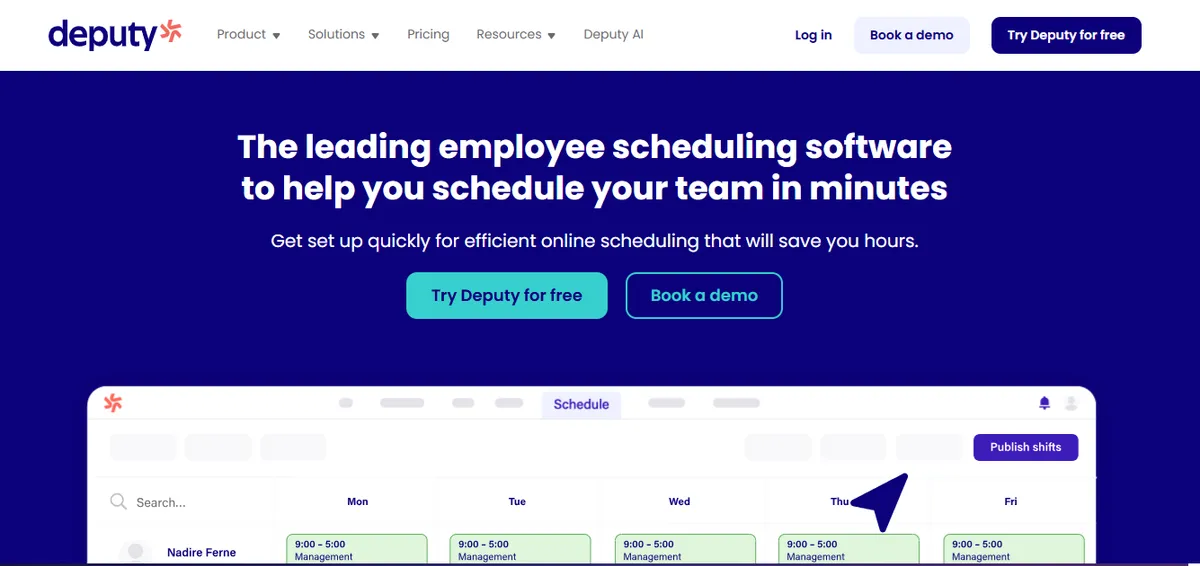
Deputy is a significant simplification from SmartLinx. If the reason for leaving SmartLinx is that the feature depth is not being used and the cost is not justified, Deputy eliminates the complexity and most of the cost simultaneously. The tradeoff is losing every healthcare-specific feature SmartLinx provided.
Best for: Hospitals that discover they were using SmartLinx primarily for shift assignment and schedule visibility, and that have no active CMS compliance obligations, no overtime tracking requirements, and no credential enforcement needs.
Key advantages:
- Dramatically simpler to use and maintain than SmartLinx
- Lowest cost of any alternative in this list
- Fast deployment; a small team is operational within days
- Strong mobile app for shift visibility and basic scheduling
Key limitations:
Healthcare compliance tooling. Deputy is a general workforce scheduling platform and does not market healthcare-specific compliance features. Verify what compliance documentation capabilities exist before evaluating as a SmartLinx replacement.
App performance. For hospitals relying on Deputy to communicate shift coverage, app reliability matters.
“Sometimes the app can be a bit slow or glitchy, especially when trying to load shifts. Also, some features are not very clear at first.”
Portia A., Nurse, Hospital & Health Care, April 8, 2026, Capterra
Healthcare feature scope. Deputy does not market healthcare-specific compliance documentation or nurse credentialing features. Confirm current capability scope with Deputy directly before evaluating as a SmartLinx replacement.
Verdict: Deputy is the right move from SmartLinx only for organizations that audited their actual SmartLinx usage and found that compliance features were going unused and the primary value was schedule publishing. For any hospital with active CMS obligations, the compliance gap is disqualifying. See our deeper Deputy alternatives guide for healthcare.
Cost: $4.50 per user per month.
When to Stay with SmartLinx?
SmartLinx is worth keeping when the hospital is large enough to justify the platform’s complexity and has completed a full implementation. At 50-150 beds with dedicated IT staff, active T&A integration, and a configuration that is already tuned to your scheduling rules, the switching cost of moving to a simpler platform typically exceeds the operational improvement. The right time to evaluate alternatives is before implementation, not after a complete deployment is running.
SmartLinx is worth keeping if:
- The hospital is in the 50-150 bed range where SmartLinx’s compliance automation and labor analytics produce measurable ROI at scale.
- The IT resources exist to maintain configuration as staff and policies change.
- Integrated time and attendance is a core requirement and the T&A integration is working correctly.
- The implementation is complete and the system is operating as configured; the switching cost and retraining burden of a new platform would exceed the operational improvement.
For hospitals that have fully implemented SmartLinx and have the IT resources to maintain it, staying is usually the right decision. The switching costs are real. The alternatives to SmartLinx are better investments at the evaluation stage, not the post-implementation stage.
How SimpleScheduleAI Compares to SmartLinx?
The most meaningful difference between SmartLinx and SimpleScheduleAI for a 25-bed hospital is not features. It is the implementation model. SmartLinx is a self-managed software platform. SimpleScheduleAI is an AI-native nurse scheduling service. Here is how that plays out across the requirements most small hospitals care about:
SmartLinx vs. SimpleScheduleAI: Small Hospital Nurse Scheduling
| Feature | SmartLinx | SimpleScheduleAI |
|---|---|---|
| Implementation timeline | 3-4 months, needs IT | Days, Excel upload |
| CMS §485.635 documentation | Yes, configured module | Yes, automatic default |
| Callout overtime ranking | Yes, configurable rules | Yes, built in |
| Time and attendance integration | Yes, integrated | Not included |
| Ongoing IT dependency | High, required for changes | None, service manages |
| Labor analytics dashboards | Yes, full analytics | Reporting via service |
| Best fit roster size | 50-150 beds | Up to 25 beds (CAHs) |
| Pricing model | Per-user, not listed | Not listed, contact for quote |
The key distinction is time and attendance integration. SmartLinx includes T&A and payroll reconciliation in the same platform, which is a meaningful advantage for hospitals that currently manage scheduling and T&A in separate systems. SimpleScheduleAI does not include T&A; if T&A integration is a core requirement, SmartLinx or a SmartLinx-comparable platform is the right choice.
For hospitals where T&A is managed through payroll software independently of the scheduling system, SmartLinx’s T&A advantage does not apply, and the implementation burden difference becomes the primary decision factor.
Our Take
SmartLinx is a healthcare-specific platform with strong compliance logic. The Critical Access Hospital question is whether the implementation effort it requires fits the administrative bandwidth a CAH actually has. The vendor's documented focus is post-acute and long-term care, not acute small hospitals. For hospitals at 50-100 beds with IT capacity for a 3-4 month implementation, SmartLinx works. For a 25-bed CAH, the implementation burden often exceeds the capacity available to run it.
What to Do This Week
Audit your SmartLinx usage. Log into SmartLinx and identify which features are actively used versus installed but dormant. If T&A integration, labor analytics, and compliance automation are all actively used and working, staying on SmartLinx is probably the right decision. If fewer than three major features are used regularly, the platform is oversized.
Calculate your total SmartLinx cost including IT. Add SmartLinx licensing, implementation amortized over the contract term, and the estimated IT time spent on SmartLinx configuration maintenance per month. The real cost of SmartLinx for a small hospital frequently runs well beyond the sticker price.
Identify the gap driving the switch. Is it implementation cost that already happened, ongoing IT dependency, per-user pricing growth, or features that do not map to your workflows? Different gaps point to different alternatives.
See how SimpleScheduleAI handles your specific use case. Describe your current SmartLinx setup, what you use it for, and what is not working. Ask how SimpleScheduleAI handles the same requirements. See how it works →
If T&A integration is non-negotiable, evaluate whether QGenda or a newer SmartLinx alternative addresses both the scheduling and T&A requirements. Do not move to a tool that eliminates T&A integration without a clear plan for how payroll reconciliation will work in the new setup.
Right-sizing from SmartLinx? Built for what small hospitals actually need.
SimpleScheduleAI delivers compliance documentation, callout overtime ranking, and CMS-ready staffing records without a 3-month implementation or ongoing IT dependency. Designed for 25-bed CAHs where SmartLinx's feature depth exceeds the operational complexity.
Sources
[1] SmartLinx workforce management product page. smartlinxsolutions.com. Verified May 2026.
[2] Aladtec by TCP ratings and reviewer quotes (verbatim with name, role, date). Vendor page: tcpsoftware.com. Capterra, verified May 2026.
[3] NurseGrid Manager ratings and reviewer quotes (verbatim with name, role, date). Vendor page: nursegrid.com. Capterra, verified May 2026.
[4] TCP Scheduling (enterprise tier, separate from TimeClock+ and Aladtec) product page. tcpsoftware.com. Verified May 2026.
[5] Deputy product page including healthcare segment. deputy.com. Verified May 2026.
[6] CMS Conditions of Participation §485.635 for Critical Access Hospitals. eCFR.
Methodology note: SmartLinx, TCP Scheduling, and Deputy capability descriptions are based on publicly available product pages. Feature availability changes; verify current details directly with each vendor before finalizing an evaluation.
Frequently Asked Questions
Is SimpleScheduleAI better than SmartLinx for a 25-bed hospital?
For a 25-bed Critical Access Hospital specifically, SimpleScheduleAI addresses the operational problems that SmartLinx was purchased to solve, compliance documentation, callout management, overtime tracking, without the 3-4 month implementation or ongoing IT dependency. SmartLinx’s additional features (T&A integration, multi-department labor analytics) are genuinely useful at 50-150 beds but underutilized at 25 beds. The implementation cost and IT dependency that SmartLinx requires at small hospital scale do not recover their investment in the same way they do at larger facilities.
How hard is it to migrate from SmartLinx to a simpler platform?
The migration difficulty depends on how deeply integrated SmartLinx is into your payroll and HR workflows. If SmartLinx’s time and attendance integration is live and payroll depends on it, migration requires replacing that data flow. If SmartLinx is used primarily for scheduling and communication, migration is simpler: the scheduling rules and staff roster transfer to the new platform, and the new platform handles forward schedules. A parallel-run period of 4-6 weeks is standard to validate the new system before fully decommissioning SmartLinx.
Does Aladtec do everything SmartLinx does?
No. Aladtec is a leaner scheduling tool. What it lacks compared to SmartLinx: integrated time and attendance, automated CMS documentation, and more sophisticated labor analytics. What it does well compared to SmartLinx: simpler configuration, self-serve maintenance, and faster initial deployment. For small hospitals where the missing features were not being used in SmartLinx anyway, the tradeoff is favorable.
What does SmartLinx cost compared to its alternatives?
SmartLinx does not publish pricing and requires a quote. Industry comparisons suggest pricing in the $300-600+ per month range for small hospital rosters, exclusive of implementation costs. Aladtec is $200-450 per month with a faster and less expensive implementation. Deputy is $4.50 per user per month with minimal implementation cost. QGenda is $500+ per month. SimpleScheduleAI uses flat monthly pricing: $1,000 for up to 20 nurses and $1,500 for 21 to 40 nurses, with no per-nurse or setup fees.
Is SmartLinx HIPAA compliant?
SmartLinx is designed to be HIPAA compliant for workforce management and scheduling data. This is a standard consideration across all scheduling platforms in healthcare and is not a differentiating factor among the tools reviewed here.
Pradeep Pandey is the co-founder of SimpleScheduleAI, an AI-native nurse scheduling service built for Critical Access Hospitals in Texas. He serves as Deputy General Manager of Operations at Apollo Hospitals and holds an MBA from IIM Trichy. LinkedIn →